
Long-term relief for bladder and bowel control problems when medications or therapy have not been enough. Dr. Joseph Gauta confirms results with a short trial before placing a small rechargeable implant.

The bladder and bowel take their signals from the sacral nerves at the base of the spine. When those signals get crossed, the brain hears "go now" too often, or the bladder will not empty when it should.
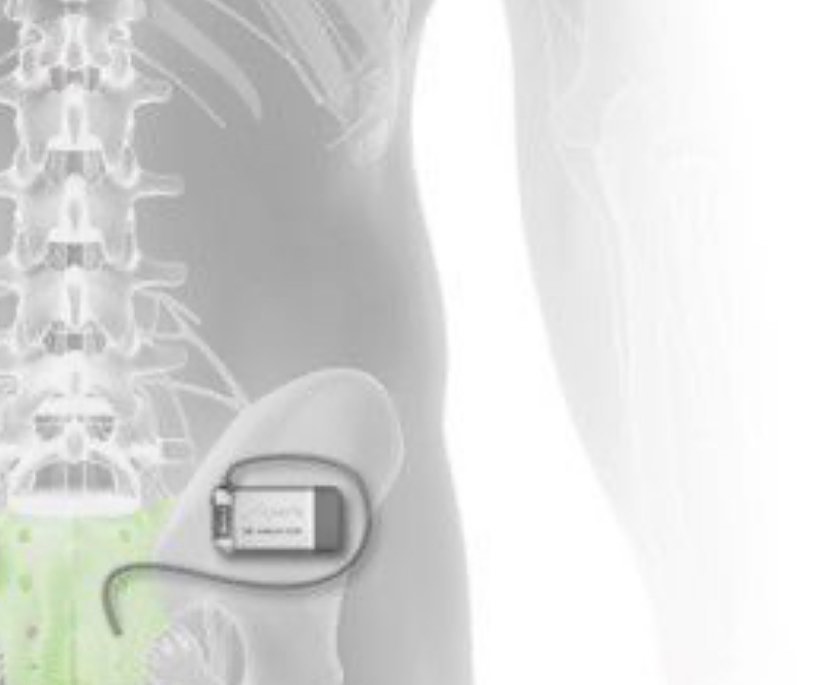
Axonics Therapy is a form of sacral neuromodulation. A thin lead sits beside the sacral nerve and connects to a small stimulator placed under the skin of the upper buttock. Gentle pulses help restore normal communication between the brain and the pelvic organs.
The treatment is minimally invasive and reversible if needed. Most patients cannot feel the pulses once the settings are right.

We recommend Axonics for women whose symptoms keep coming back after first-line care. You may be a candidate if you live with:
Many of our patients have planned their days around restroom locations for years. A visit with our team is the first step to finding out whether Axonics fits your symptoms.
In these short clips, Dr. Gauta walks through what sacral neuromodulation is and which bladder and bowel symptoms it can help.
He has treated pelvic floor conditions in Naples since founding the practice in 2006, and he performs Axonics procedures himself.
You try Axonics before you commit to it. Each stage has a clear check before the next one begins.
We review your history, bladder diary and past treatments. When it helps, bladder or bowel testing is done right here in our office so the plan rests on measured results, not guesswork.
A temporary lead connects to a small external stimulator worn for a short trial. You track your symptoms at home, then we compare them with your starting diary. A clear improvement is the signal to move ahead.
Dr. Gauta places the long-term stimulator in the upper buttock through a small incision. Depending on your plan, the procedure is done in our office or at the accredited Surgery Center of Naples.
We program the device, show you how to use the handheld remote and charger, and see you back to fine-tune the settings until your symptoms settle.
The rechargeable stimulator is designed to function for more than 15 years, so most patients avoid repeat battery surgeries.
You can check the device and adjust stimulation levels with a small remote, and recharge it at home with the included charger.
The Axonics system is designed to allow full-body MRI scans, which matters for women who expect imaging in the years ahead.
Stimulation can be turned off at any time, and the implant can be removed. Nothing about the bladder or bowel is permanently changed.
Axonics is one step in a larger plan. We usually begin with the least invasive care, and every option below is offered at our Naples office, so moving from one to the next does not mean starting over with a new practice.
Daily medication to calm urgency and frequency, often the first treatment we try.
Learn moreIn-office injections that relax the bladder muscle for months at a time.
Learn moreAnother sacral neuromodulation system we compare with Axonics for each patient.
Learn moreA non-invasive chair that strengthens the pelvic floor while you stay fully clothed.
Learn moreMeasured bladder testing that shows why symptoms happen before treatment begins.
Learn moreTesting and treatment for accidental bowel leakage, including Axonics when it fits.
Learn more
Joseph Gauta, MD founded our practice in 2006 as one of the country's first practices focused only on urogynecology. He is board-certified by the American Board of Obstetrics and Gynecology and by the American Board of Medical Specialties in Urogynecology and Reconstructive Pelvic Surgery, known as URPS. Patients travel from around the world to see him, and our staff speak several languages.

Sees many new patients and helps decide whether testing is the right first step.

Brings a background in urology to bladder and bowel evaluations.
"The doctor took his time and explain everything and all my options."Brannan Glass, Google review
The cost of Axonics Therapy in Naples, FL averages $7,000 to $21,700 at local surgery centers, according to New Choice Health price data for sacral nerve stimulator implantation. The same data puts the procedure at $12,000 to $37,600 in a Naples hospital, with a median near $15,900 across 11 area providers and a U.S. average of $19,113.
These are full prices before insurance. Medicare and many private plans cover sacral neuromodulation once medications or other first steps have not worked, so many patients pay only their deductible and coinsurance. The trial phase comes before the implant and is billed on its own.
What you pay depends on your plan and the treatments you have already tried. Our team can check your coverage for the trial and the implant before you decide. See insurance and financing for more.
Coverage depends on your specific plan and your treatment history, so we look at each patient's benefits one by one. Our team can check your plan before the trial so you know where you stand.
That is what the trial is for. You wear a temporary stimulator and record your symptoms, and we compare the results with your starting bladder or bowel diary. We only move to the long-term implant when the trial shows a clear improvement.
The cost of Axonics Therapy in Naples, FL averages $7,000 to $21,700 at local surgery centers and $12,000 to $37,600 in a hospital, according to New Choice Health. Medicare and many private plans cover it after other treatments have not helped, so what you pay depends on your plan. Your expected costs are reviewed at your consultation, before any trial begins.
The implant is a minimally invasive procedure through a small incision in the upper buttock. Dr. Gauta gives you activity guidance for the first weeks and sees you back to adjust the settings.
Yes. Axonics is reversible if needed. Stimulation can be switched off at any time, and the device can be removed without permanent changes to the bladder or bowel.
The Axonics system is designed to allow full-body MRI scans. Tell the imaging center you have the device, and we can share the details they need.
The rechargeable stimulator is designed to function for more than 15 years. You recharge it at home with the charger we set up with you.

Meet with Dr. Gauta and our team in Naples to find out whether an Axonics trial makes sense for your symptoms.